Western and Central Africa
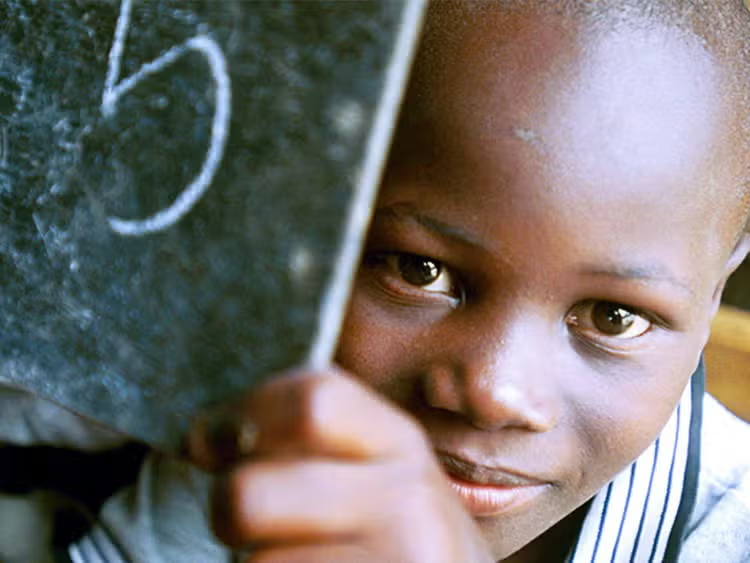
When managed effectively, debt can become a powerful catalyst for development.
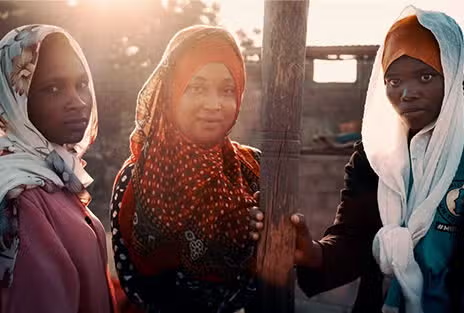
THE WORLD BANK GROUP IN WESTERN AND CENTRAL AFRICA
Economic Overview: Economic activity in AFW is projected to accelerate from 4.1% in 2024 to 4.3% by 2026–27. Excluding Nigeria, the subregion grew at a faster rate in 2024 (5.1%) and is expected to reach 5.3% by 2027. The West African Economic and Monetary Union (WAEMU) is forecast to grow robustly, from 5.9% in 2024 to 6.0% in 2027, driven by strong performance in Côte d’Ivoire, Niger, and Senegal. Nigeria’s economic growth is expected to remain moderate, rising from 3.4% in 2024 to 3.8% by 2026–27.
Development Challenges: Western and Central Africa is a region of tremendous potential, with a young and dynamic population, abundant natural resources, and a rich cultural heritage. However, it faces significant challenges. The region is home to about a quarter of the world’s extreme poor, and more than 70% of its population now lives in countries affected by fragility, conflict, and violence. Of the 22 countries in AFW, 20 are eligible for International Development Association (IDA) assistance.
To keep pace with population growth, the continent must create 15 million jobs annually, yet current job creation falls far short. The challenge is especially acute in AFW, where over 80% of jobs are in the informal sector, and high-potential industries such as mining, energy, and commercial farming face a shortage of skilled workers, forcing businesses to import labor.
Currently, 220 million people in AFW lack access to electricity, limiting opportunities for business, income generation, education, and health services. Only 26% of Africa’s population has access to the internet.
Climate risks further threaten the region’s progress. Estimates suggest that adverse weather events—including heatwaves, floods, and droughts—could cause annual GDP losses of 2% to 19% by 2050, pushing millions more into poverty and exacerbating food insecurity.
BY THE NUMBERS: NO DATA
OUR PRIORITIES IN WESTERN AND CENTRAL AFRICA
Jobs
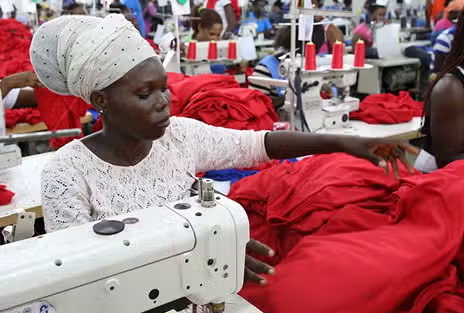
Creating jobs in Western and Central Africa is vital for economic growth and stability. When people have decent work, they can support their families, improve their education, and build better lives for themselves and their communities.
Energy
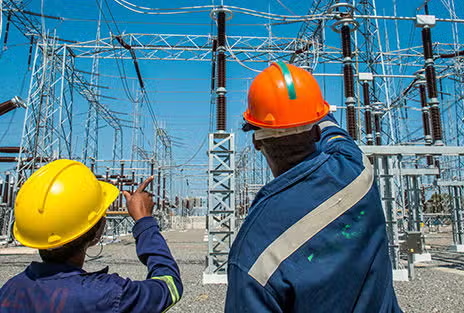
Affordable, reliable, and sustainable energy is essential for improving lives and unlocking Africa’s full potential. With innovative projects lighting up homes, schools, and businesses, communities across the continent are experiencing real change and new opportunities for growth.
Empowering Women
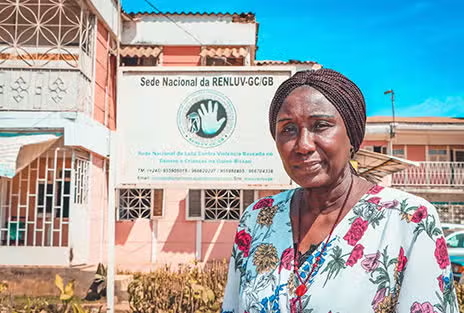
Investing in the empowerment of women and girls is essential to transforming Western and Central Africa and improving lives. When women and girls have equal access to opportunities, entire communities benefit from greater progress, inclusive growth, and lasting resilience.
THE LATEST FROM WESTERN AND CENTRAL AFRICA
In fiscal year 2024, the World Bank approved $11 billion in funding for 66 projects across Western and Central Africa, including $1.7 billion from IBRD and $9.3 billion from IDA. This significant investment supports development and progress throughout the region.
CONNECT WITH US
Regional Leadership


Chief Economist, Africa
Regional Contact
The World Bank
1818 H Street, NW
Washington, DC 20433
USA
africateam@worldbank.org